How to Optimise Shopify Meta Titles and Meta Descriptions
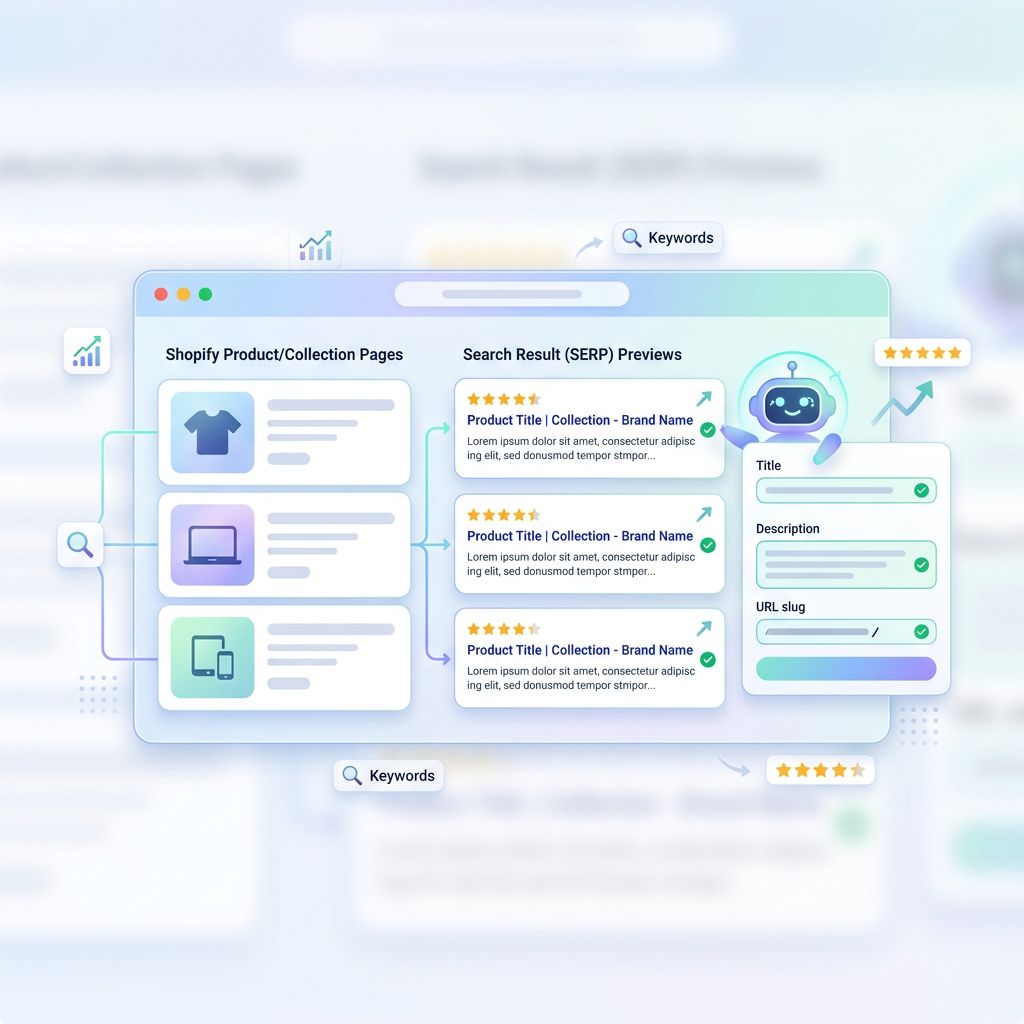
Meta titles and meta descriptions are important parts of Shopify SEO. They help search engines understand your pages and influence how your store appears in search results.
For ecommerce stores, strong metadata can make product pages, collection pages, blog posts, and landing pages more appealing to potential customers.
What is a meta title?
A meta title is the page title that may appear as the clickable headline in search results.
For Shopify product pages, a meta title should usually include:
- Product name
- Product type
- Important attribute
- Brand name, where useful
Women’s Black Leather Ankle Boots | Brand Name
What is a meta description?
A meta description is a short summary of the page. It may appear under the title in search results.
“Shop women’s black leather ankle boots designed for everyday comfort, versatile styling and a premium finish. Available online now.”
A good meta description should explain the page clearly and give customers a reason to click.
Why Shopify metadata matters
Metadata helps with:
- Search visibility
- Click-through rate
- Page relevance
- Product discovery
- Customer understanding
Missing or duplicated metadata can make your search results look weak or generic. If you suspect you have gaps, start with how to find missing meta descriptions in Shopify.
How to write Shopify meta titles
A good Shopify meta title should be:
- Clear
- Unique
- Relevant
- Not overly long
- Keyword-aware
- Written for humans
“Product Page”
“Buy Now Online Cheap Best Product Free Shipping”
Instead, use a clean format: [Product Name] | [Product Type] | [Brand]
Organic Cotton Baby Blanket | Soft Newborn Blanket | Brand
How to write Shopify meta descriptions
A good meta description should:
- Summarise the product or page
- Include the main keyword naturally
- Mention a key benefit
- Match the page content
- Encourage the click
- Be unique
“Shop the organic cotton baby blanket, made from soft breathable fabric for everyday comfort. A thoughtful gift for newborns and parents.”
“Explore women’s leather ankle boots in classic and modern styles, designed for everyday wear, evening outfits and seasonal wardrobes.”
Optimising product page metadata
For product pages, focus on:
- Product type
- Material
- Colour
- Fit
- Size
- Use case
- Main benefit
Men's Waterproof Hiking Jacket | Lightweight Outdoor Jacket
Meta descriptionShop the men's waterproof hiking jacket, designed for lightweight protection, breathable comfort and everyday outdoor use.
Product-page metadata works hand in hand with the rest of the page — see how to improve Shopify product page SEO.
Optimising collection page metadata
Collection pages should describe the full range, not just one product.
Women's Leather Bags | Crossbody, Tote and Shoulder Bags
Meta descriptionBrowse women's leather bags including crossbody, tote and shoulder styles, designed for everyday use, work and weekend outfits.
Optimising blog post metadata
Blog metadata should explain what the reader will learn.
How to Choose the Right Winter Jacket
Meta descriptionLearn how to choose the right winter jacket based on warmth, fit, materials, water resistance and everyday use.
Writing the post itself? See how to generate Shopify blog posts with AI.
Common Shopify metadata mistakes
Avoid:
- Missing meta descriptions
- Duplicate metadata across products
- Keyword stuffing
- Titles that are too vague
- Descriptions that do not match the page
- Using supplier copy everywhere
- Forgetting collection pages
- Ignoring blog metadata
A full Shopify SEO audit checklist helps you catch these across the whole store.
Can AI help optimise Shopify metadata?
Yes. AI can generate meta titles and descriptions quickly, especially for stores with many products.
AI is useful for:
- Filling missing metadata
- Rewriting weak metadata
- Creating metadata in bulk
- Matching tone of voice
- Generating product-specific descriptions
- Improving collection page snippets
You should still review metadata for important products and high-traffic pages. For the wider picture, see how to use AI to improve Shopify SEO.
Final thoughts
Optimising Shopify meta titles and meta descriptions is a practical SEO improvement that many stores overlook. It helps your pages look better in search results and gives customers a clearer reason to click.
SitePx helps Shopify merchants audit missing metadata and generate SEO-friendly meta titles and descriptions using AI.
Get a free Shopify SEO audit when you install SitePx
SitePx audits your store, then generates and bulk-updates SEO-optimized product descriptions, titles, and metadata — with review before anything goes live. Install free and see what's holding your store back in minutes.
Free plan available · No credit card required
Keep reading
- Technical SEO
How to Find Missing Meta Descriptions in Shopify
Missing, duplicated, or weak meta descriptions quietly cost you clicks. Here's a simple audit workflow to find missing meta descriptions in Shopify across products, collections, and blogs — and fix the ones that matter first.
- SEO Audit
Shopify SEO Audit Checklist
A structured, 12-point Shopify SEO audit checklist covering product titles, descriptions, metadata, collections, images, internal links, blogs, and technical SEO — so you can find the highest-impact fixes first.
- Product SEO
How to Improve Shopify Product Page SEO
Product pages are where customers decide to buy — and where organic traffic lands. Here's how to improve Shopify product page SEO with better titles, descriptions, metadata, images, internal links, and AI workflows.
- AI Tools
How to Use AI to Improve Shopify SEO
Shopify SEO is full of repetitive work — descriptions, metadata, alt text, blog content, audits. Here's how to use AI to improve Shopify SEO across all of them, with a safe workflow that keeps you in control.