How to Generate Shopify Blog Posts with AI
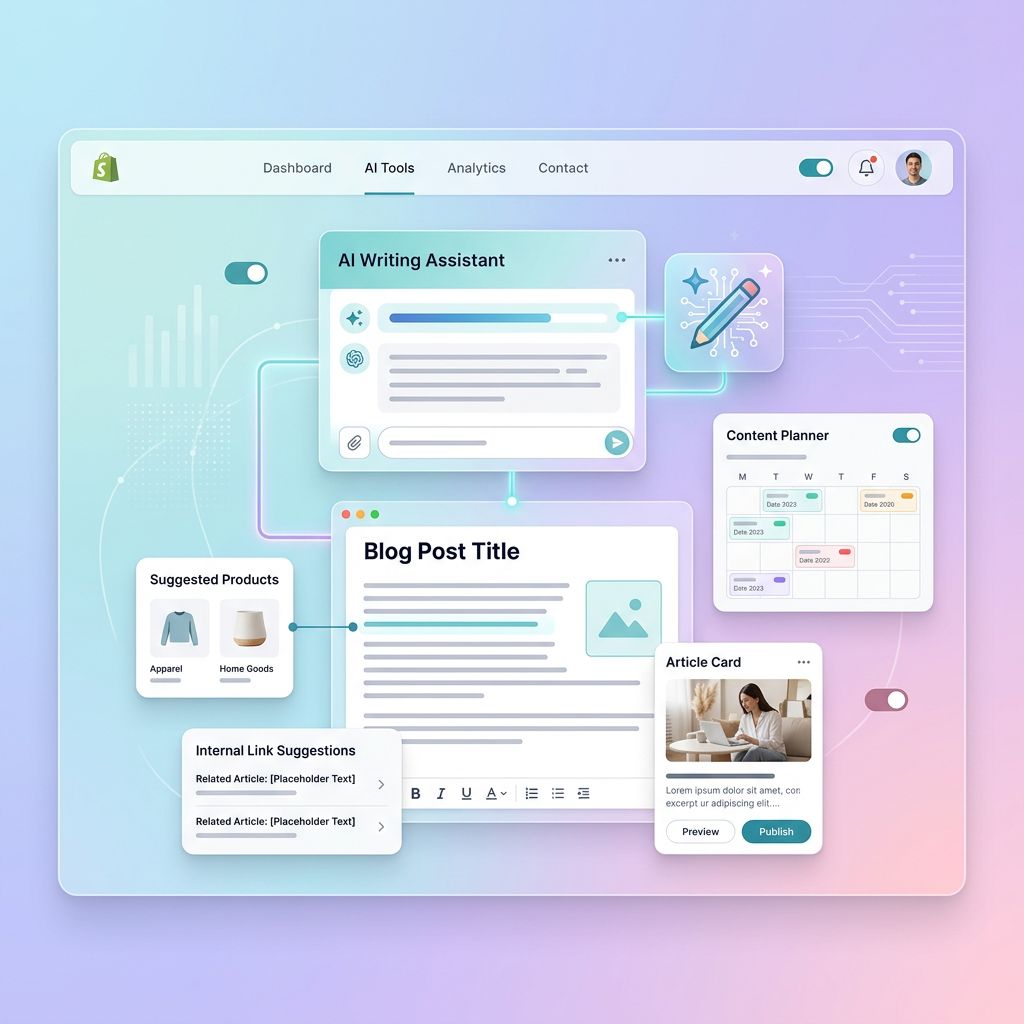
Blog content can help Shopify stores attract organic traffic, answer customer questions, and support product discovery. But writing consistent blog content takes time.
AI can make the process faster by helping you generate ideas, outlines, first drafts, product guides, buying guides, and SEO-focused articles. If you are still choosing tooling, see our guide to the best AI tools for Shopify product descriptions, many of which also help with blog content.
The key is to use AI as part of a structured content workflow, not as a shortcut for publishing generic content.
Why blog content matters for Shopify stores
Product pages usually target people who are close to buying. Blog posts can target people earlier in the buying journey.
For example:
- A skincare store can write about routines and ingredients
- A fashion store can write styling guides
- A homeware store can write buying guides
- A fitness store can write training tips
- A pet store can write care guides
These articles can then link naturally to relevant products and collections.
Start with the right topics
Before generating blog posts with AI, choose topics that match your customers’ questions.
Good Shopify blog topics include:
- How-to guides
- Product comparisons
- Buying guides
- Care guides
- Styling advice
- Gift guides
- Seasonal guides
- Problem-solving content
- FAQs
- How to choose the right running shoes
- Best skincare routine for dry skin
- How to style a black leather jacket
- Gift ideas for new homeowners
- How to care for wool knitwear
Use keywords with buying intent
A blog post should have a clear SEO target.
Useful keyword types include:
- How to choose…
- Best… for…
- What is the difference between…
- How to care for…
- Gift ideas for…
- Beginner’s guide to…
- Product type + use case
Avoid writing random blog posts that do not connect to your products.
AI blog workflow for Shopify
Use this workflow:
1. Choose the topic
Pick a topic your customer would search for.
2. Define the target keyword
3. Create the outline
Ask AI to generate a structure with useful sections.
- Introduction
- Why the right jacket matters
- Warmth
- Water resistance
- Fit
- Materials
- Best jackets for different use cases
- Care tips
- Recommended products
- Conclusion
4. Generate the first draft
Use AI to write the first draft based on the outline.
5. Add product and collection links
This is where Shopify blog content becomes commercially useful.
Add links to:
- Relevant products
- Collections
- Buying guides
- Related blog posts
6. Edit for accuracy and brand voice
AI drafts need review. Make sure the blog is accurate, useful, and aligned with your brand. The same care applies to product copy — see how to write SEO product descriptions for Shopify.
7. Optimise metadata
Every Shopify blog post should have:
- SEO title
- Meta description
- Clear URL handle
- Headings
- Internal links
- Image alt text
If you are not sure which posts are missing metadata, our guide on how to find missing meta descriptions in Shopify covers blog posts too.
Example AI prompt for Shopify blog posts
“Write a Shopify blog post targeting the keyword ‘how to choose a winter jacket’. The audience is customers shopping for premium outerwear. Include practical advice, clear headings, natural internal link suggestions to product collections, and a helpful tone. Avoid keyword stuffing.”
What to avoid when using AI for Shopify blogs
Avoid:
- Publishing without editing
- Generic articles with no product relevance
- Overusing keywords
- Making unsupported claims
- Forgetting internal links
- Ignoring your brand voice
- Creating content that does not help the customer
AI can produce content quickly, but quality still matters.
Blog post ideas for Shopify stores
Here are a few ideas:
- How to choose the right size in [product category]
- Best [product category] for [use case]
- How to care for [material]
- [Product category] buying guide
- Top gift ideas for [audience]
- How to style [product]
- What to look for when buying [product]
Final thoughts
AI can help Shopify merchants create blog content faster, but the best results come from combining AI with clear SEO strategy, product knowledge, and human review. A broader Shopify SEO audit checklist helps make sure your blog supports the rest of your store.
SitePx can help Shopify merchants generate blog content, product descriptions, and SEO metadata using AI, making it easier to build a consistent content workflow for your store.
Get a free Shopify SEO audit when you install SitePx
SitePx audits your store, then generates and bulk-updates SEO-optimized product descriptions, titles, and metadata — with review before anything goes live. Install free and see what's holding your store back in minutes.
Free plan available · No credit card required
Keep reading
- AI Tools
Best AI Tools for Shopify Product Descriptions
Not every AI writing tool fits Shopify. We compare the main types of AI tools for Shopify product descriptions — Shopify-specific apps, general writers, SEO platforms, and bulk editors — and how to choose the right one.
- Product SEO
How to Write SEO Product Descriptions for Shopify
A good Shopify product description helps customers decide and helps search engines understand your page. Here's how to write SEO product descriptions that rank — with structure, keywords, and a worked example.
- SEO Audit
Shopify SEO Audit Checklist
A structured, 12-point Shopify SEO audit checklist covering product titles, descriptions, metadata, collections, images, internal links, blogs, and technical SEO — so you can find the highest-impact fixes first.
- AI Tools
How to Use AI to Improve Shopify SEO
Shopify SEO is full of repetitive work — descriptions, metadata, alt text, blog content, audits. Here's how to use AI to improve Shopify SEO across all of them, with a safe workflow that keeps you in control.